What you will see
Chapter 1: Hot Water and Gods (25 minutes)
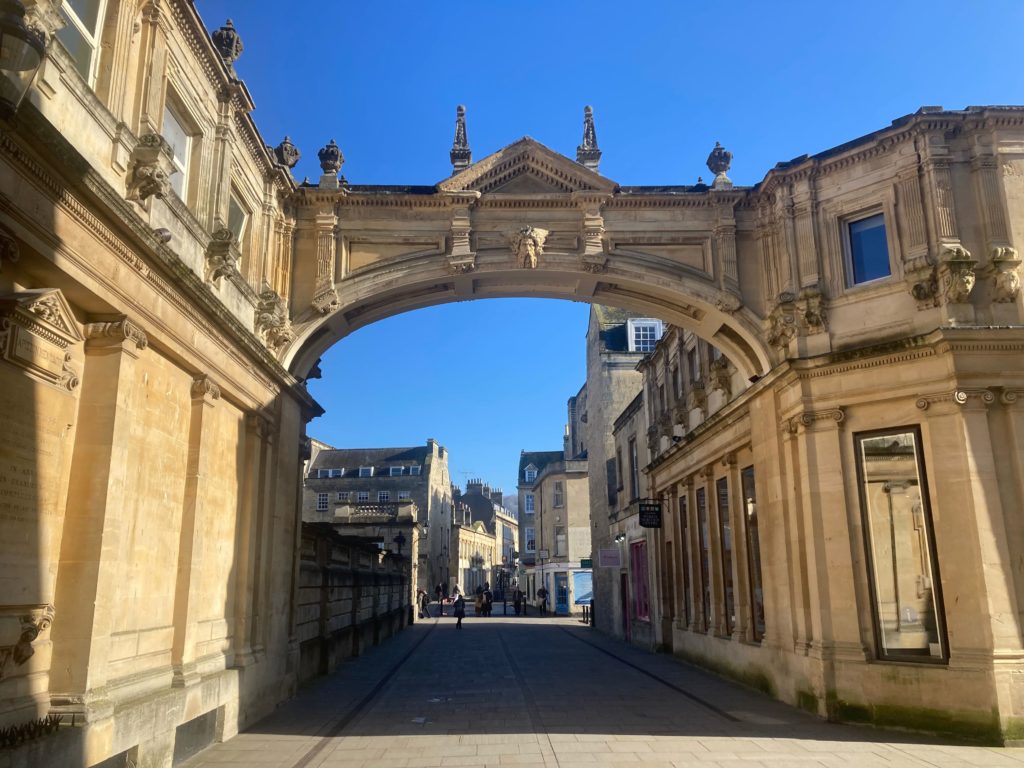
We start in front of the Abbey in Abbey Churchyard, where the Roman Baths Museum is. This is where it all began.
We explore the narrow lanes and intimate courtyards comprising the heart of Bath with its three hot springs, a sacred place of healing since before the Romans.
You’ll learn about the Saxons’ monastery and stone abbey, grand enough to host the coronation of the first king of England in 973. Then came a huge Norman cathedral, erected in the 1150s. The current Tudor-era Abbey was finished just in time to suffer Henry VIII’s violent Dissolution of the Monasteries in 1539.
Chapter 2: Wall (50 minutes)
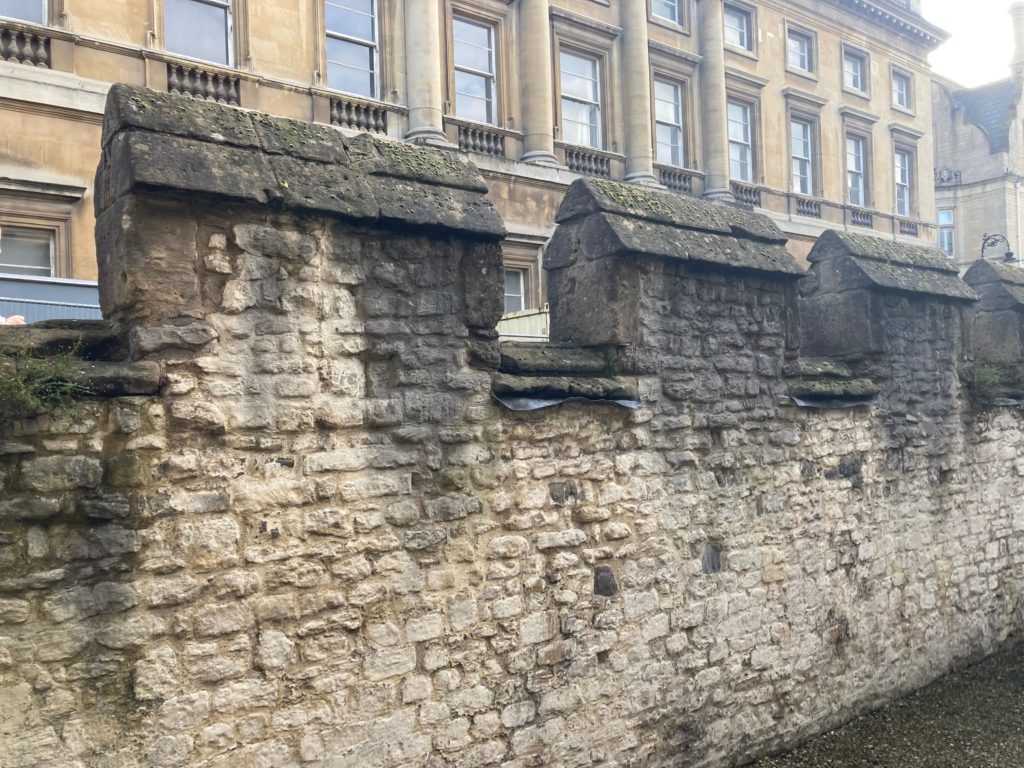
Before they left, the Romans built a defensive stone wall around their temple and spa precinct, which Alfred the Great used as the foundation for his wall against the Danes in the late 800s.
This wall enclosed the entire city, just 24 acres in area, right up until the mid-1700s, when its fame as the most popular resort for the aristocracy in the country brought thousands of visitors, sparking a building boom that saw the city burst through its wall to fill the valley.
We’ll explore the circuit of the wall to see the remaining visible sections and examine how the city started pushing through it from the 1730s and 40s.
Chapter 3: River (31 minutes)
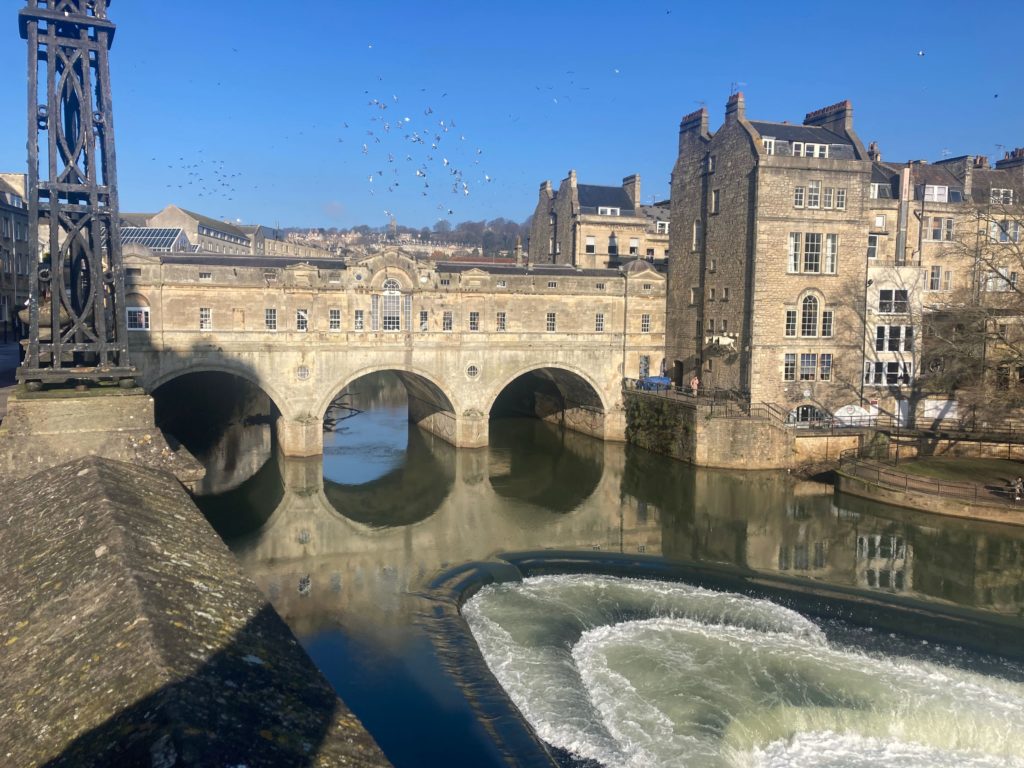
The powerful River Avon flows through town and provides the backdrop for the early collaboration in the 1720s between John Wood, the unsung visionary architect who gave Georgian Bath its look, and the city’s first industrialist, Ralph Allen, who helped make the river navigable to Bristol.
With his scientific approach to quarrying, Allen also made Bath stone the material of choice for the expanding city. From the river, we can also see up close what the ingenious Isambard Kingdom Brunel had to do to bring his Great Western Railway through Bath in 1841.
Chapter 4: Stone (39 minutes)
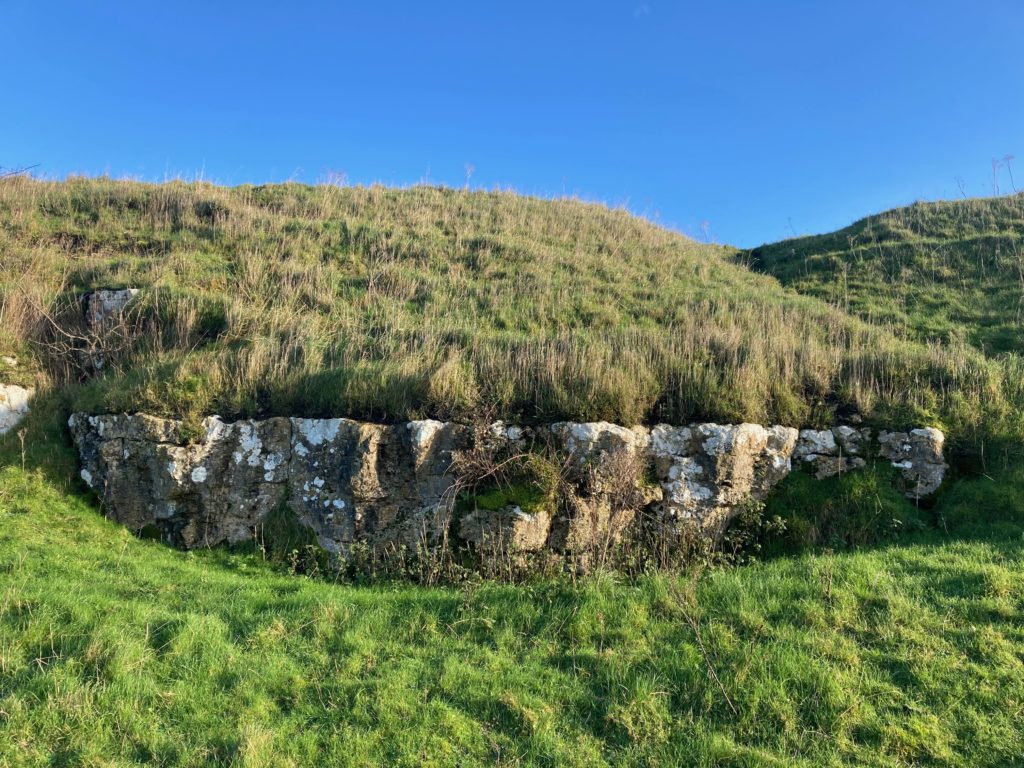
Bath got its complex topography thanks to the stone the city’s made of, which caps the surrounding hills and resisted millennia of erosion caused by torrents of melting glacial run-off.
We climb the famous Beechen Cliff to get stunning views out over the city.
As we go, we hear the story of the landscape’s formation and Bath resident John Smith, named Father of English Geology, who pioneered the science of stratigraphy. At the summit we’ll sample the dramatic countryside, part of the Cotswolds Area of Outstanding Natural Beauty.
Chapter 5: Canal (27 minutes)
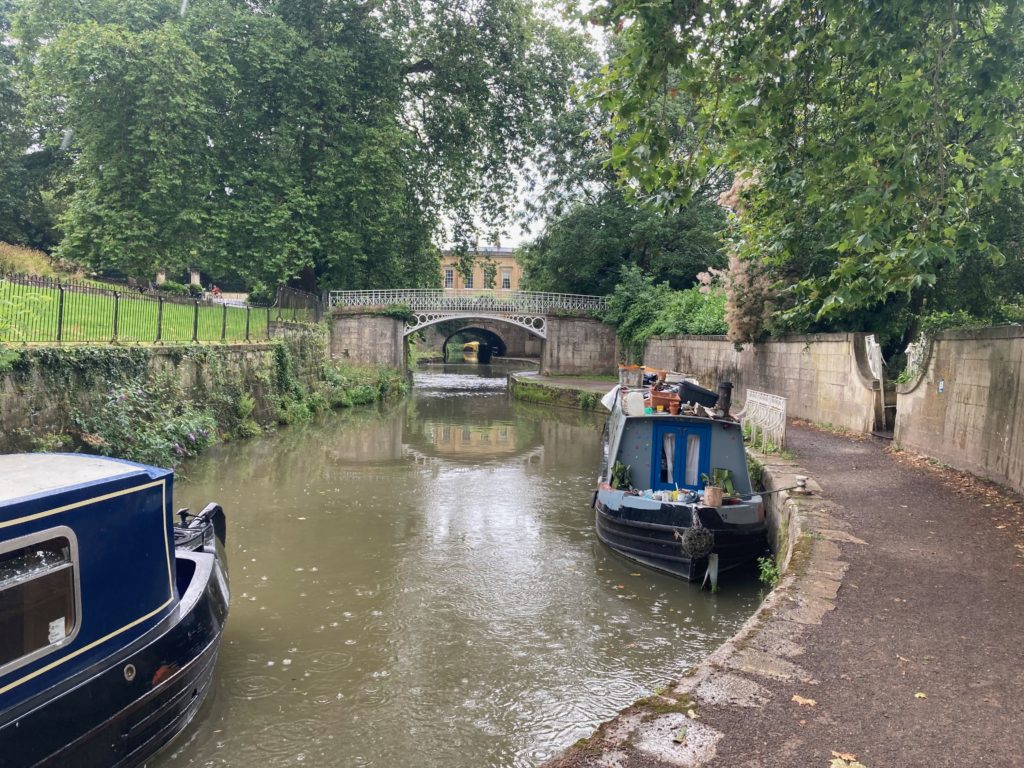
The Kennet & Avon Canal was the first modern megaproject to touch Bath, opening here in 1801 to make it a port city on the first inland waterway stretching all the way from London to Bristol.
It was Southern England’s superhighway until the Great Western Railway came through in 1841. It’s now Bath’s second riviera, otherworldly in its tranquillity, a linear oasis for species under pressure and, for humans, a popular mode of alternative living.
Chapter 6: Guild (23 minutes)
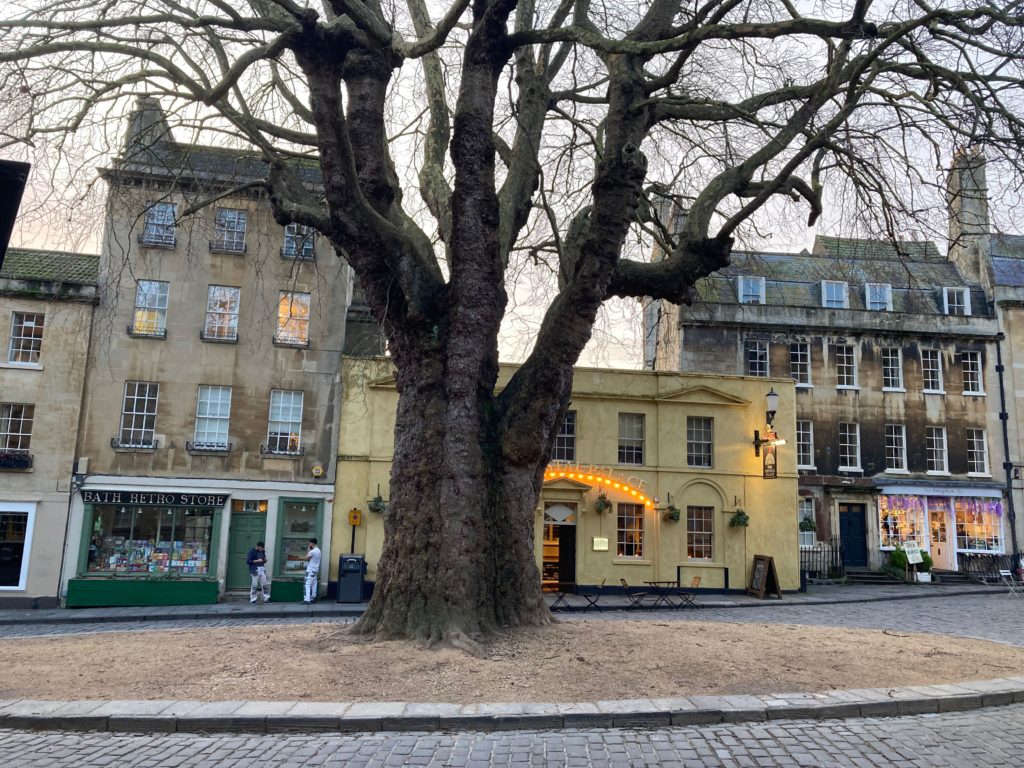
We cut back through town over Pulteney Bridge, one of only four in the world with shops along both sides.
We’ll see the later Palladian developments John Wood inspired, including those designed by the precocious Thomas Baldwin, darling of the City Corporation until his career ended in prison and bankruptcy.
Hear the story of the ancient Guild of Merchants, forerunner to the City Corporation and today’s council, who wrested control of the city from the church in a daring appeal to Richard the Lionheart in 1189.
Chapter 7: Square, Circle, Crescent (38 minutes)
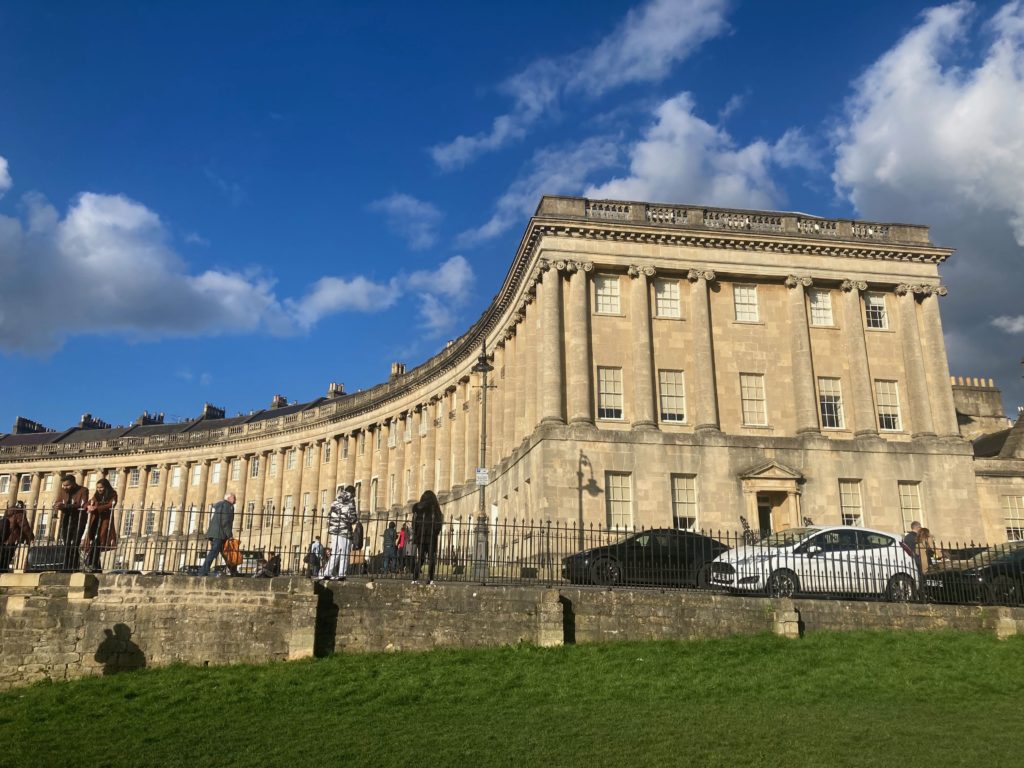
John Wood is the reason Georgian Bath looks like it does, and he comes into focus here.
The self-taught son of a local builder whom the local establishment rejected, he became obsessed with his own wild theories about Bath’s prehistoric past.
These ideas drove him to champion the avant-garde Palladian architectural style, which was unknown in Bath at the time but which became standard after his untimely death.
We climb the hill to see the flight of three iconic compositions he designed outside the wall – Queen Square, the King’s Circus and the Royal Crescent. Seeing them, you’ll understand why he’s been called “the Mozart of English architects”.
.
Chapter 8: Surviving the Sack (28 minutes)
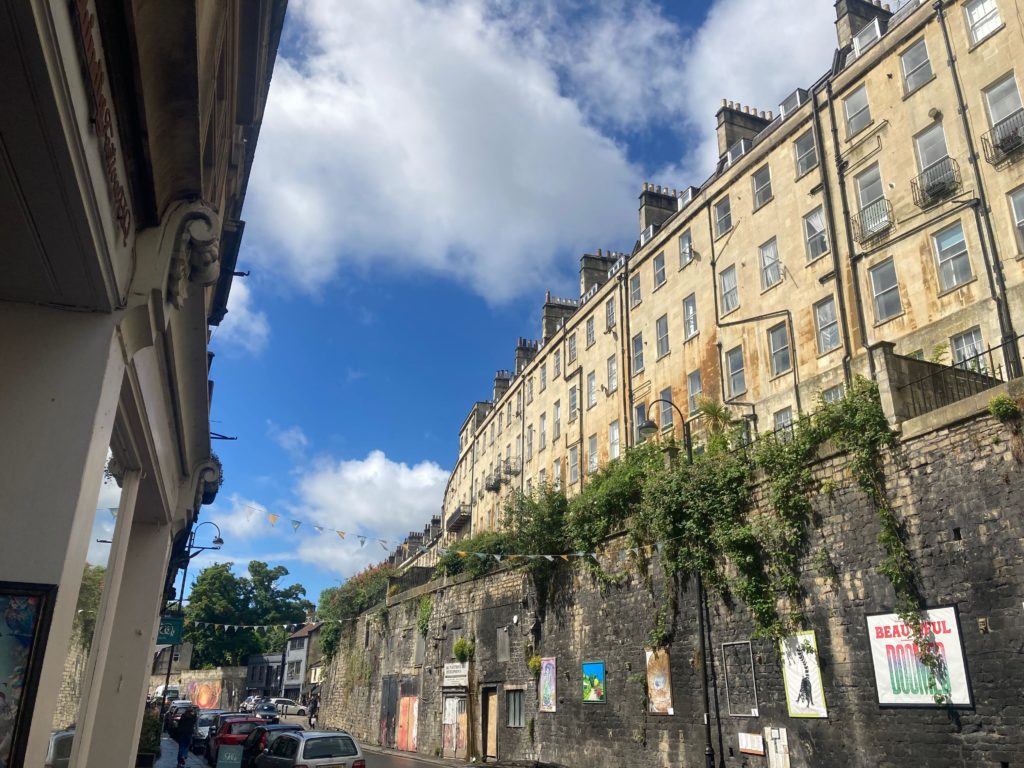
The final chapter takes us down Bath’s oldest road, Walcot Street, built by the Romans to get to the hot springs. Overlooked by a precipitous Palladian street – the Paragon, dating from the 1770s – it resisted Georgian and Victorian gentrification and remains a bastion of independent shops and restaurants.
It almost didn’t survive Bath’s disastrous flirtation with Brutalism after the Second World War, however, when the City Corporation turned against its heritage and bulldozed hundreds of historic buildings in the name of modernisation – an episode known as “The Sack of Bath”.
These and other stories take us to the end of the walk at the rear of the Abbey.